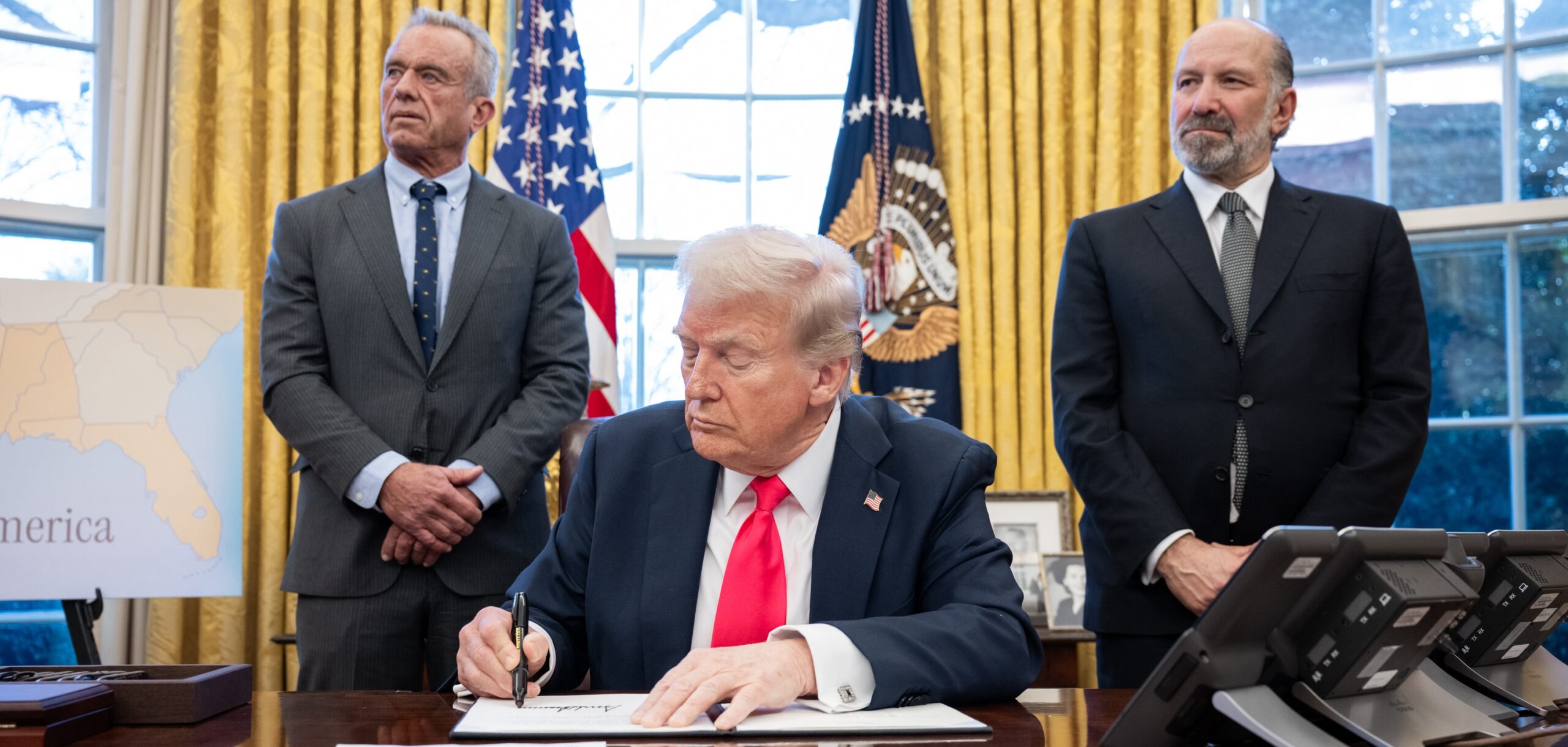
As President Donald Trump unveiled sweeping tariffs against America’s trading partners, he repeatedly emphasized that each country’s rate was determined by a reciprocal formula—meant to reflect long-standing trade barriers imposed on US goods.
However, the methodology behind the calculations remained unclear until a later clarification by the White House and independent analysis by experts.
The methodology behind Trump’s reciprocal tariffs
Trump’s administration formulated the new tariff rates by taking the US trade deficit with each country and dividing it by the total exports that country sent to the US.
To soften the impact, the final tariff number was then halved.
Deutsche Bank confirmed this approach, noting that the larger a country’s trade deficit with the US, the higher its tariff rate under the new system.
The White House later published an explanation of its formula on the US Trade Representative’s website.
“While individually computing the trade deficit effects of tens of thousands of tariff, regulatory, tax and other policies in each country is complex, if not impossible, their combined effects can be proxied by computing the tariff level consistent with driving bilateral trade deficits to zero,” the USTR said.
“If trade deficits are persistent because of tariff and non-tariff policies and fundamentals, then the tariff rate consistent with offsetting these policies and fundamentals is reciprocal and fair,’ it added.
While the calculations included mathematical symbols, they ultimately aligned with the trade deficit-based approach previously suspected.
BBC’s Faisal Islam has posted the formula:
THREAD:
The so-called “reciprocal” tariff doesn’t reflect the tariffs charged elsewhere directly but essentially the size of a country’s trade surplus, which has been used as a proxy. The equation essentially is aimed at levying a fee that would get this surplus to zero.
Economists express skepticism over the simplistic nature of the formula
Trade experts and economists have expressed skepticism over the simplistic nature of the formula.
Emily Kilcrease, director at the Center for a New American Security and former deputy assistant US trade representative, stated that while the administration needed a quick solution, this methodology appears to be an “approximation” that is consistent with their policy goals.
Deutsche Bank outlined three major concerns with the tariff policy:
First, the US administration appears primarily focused on targeting countries with significant trade deficits in goods, while services remain excluded from consideration.
This approach relies on a rigid formula rather than a nuanced evaluation of tariff and non-tariff barriers.
Second, there is a stark contrast between recent official statements suggesting a thorough policy review of bilateral trade relationships and the actual implementation of these tariffs.
This discrepancy raises concerns about the administration’s policy credibility moving forward.
Markets may begin to doubt whether major economic decisions are being made through a well-structured process.
Third, the methodology used to calculate these tariffs introduces an unpredictable element to future trade negotiations.
Rather than outlining clear and specific policy demands, the administration appears to be using tariffs as a broad instrument to pressure countries into reducing trade imbalances, leaving room for significant uncertainty in upcoming talks.
How unprecedented are the tariffs?
Shane Oliver, head of investment strategy at AMP, compared the current tariff environment to the Smoot-Hawley Tariff Act of the 1930s, which exacerbated the Great Depression.
He estimated that Trump’s latest tariff measures could push the US average tariff rate above levels seen in that era, increasing recession risks.
As analysts digest the potential fallout, concerns are growing over global economic stability.
Deutsche Bank warned that the tariff-driven uncertainty could weaken the US dollar, while Oliver suggested that global growth may slow to around 2%, down from the current 3%, depending on retaliation from affected countries.
China’s response is expected to be particularly significant.
If Beijing retaliates with counter-tariffs or economic measures, it could exacerbate supply chain disruptions and further destabilize markets.
The post Here’s how Trump tariffs were calculated and why experts are raising concerns with the methodology? appeared first on Invezz