As tensions between Israel and Iran escalate, the airwaves are full of alarmist commentary. Military analysts and political leaders alike are warning that Tehran is ‘on the brink’ of possessing a nuclear weapon. White House Press Secretary Karoline Leavitt even claimed, ‘Iran has all that it needs to achieve a nuclear weapon … and it would take a couple weeks to complete the production of that weapon.’ This is not just a misstatement. It is misinformation—and it risks pushing the United States into a hasty and unjustified war.
The reality is far more complex. Enriched uranium—even at weapons-grade levels—is only one component of a long, technically demanding process required to create a functional nuclear bomb. Understanding why this alarmism is premature requires a clear breakdown of what’s actually involved in building such a device.
According to U.S. experts and declassified intelligence assessments, a nuclear weapon requires at least the following elements:
- Highly Enriched Uranium (HEU): Iran would need U-235 enriched to 90%, but that alone is insufficient.
- Precision Shaping: The uranium must be machined into a flawless sphere, requiring high-end metallurgy and computing.
- Explosive Lenses: Carefully placed charges must detonate simultaneously to compress the core—a method called implosion.
- Trigger Mechanisms: These detonators must be precisely synchronized; even a microsecond delay renders the weapon ineffective.
- Reflectors and Tampers: Elements like beryllium are required to maintain compression and sustain the chain reaction.
- Weaponization: The bomb must be ruggedized into a functional assembly, including casing and electronics that can survive delivery.
- Delivery Systems: The weapon must be fitted onto a missile, aircraft, or another platform capable of reaching its target.
In addition to enriched uranium and implosion mechanisms, a functional nuclear weapon requires several other complex components that Iran has not demonstrably mastered. These include a neutron initiator to trigger the chain reaction, precision fusing and arming systems, and reentry vehicle technology if the weapon is to be missile-delivered. A credible nuclear arsenal also demands sub-critical testing infrastructure to validate design functionality and safety protocols to control explosive yield. These technical requirements involve advanced engineering, testing, and materials—none of which are confirmed to exist in Iran’s program today.
Each of these steps represents a serious technological challenge. While Iran has demonstrated enrichment capabilities, there is no credible open-source evidence that it has mastered the other essential components. The most difficult hurdle—weaponization—remains the most classified and technically advanced part of the entire process.
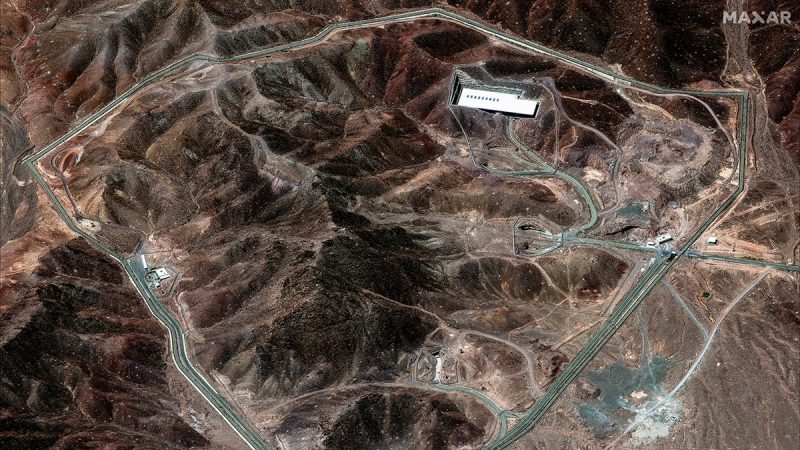
Yet Israel’s recent week of strikes on Iranian nuclear and military facilities—including the deeply buried Fordow enrichment site near Qom—were reportedly driven by fears that Iran had crossed the 90% enrichment threshold. Prime Minister Benjamin Netanyahu declared that Iran now possesses enough enriched uranium for ‘nine nuclear weapons’ and the IDF’s Chief of Staff Eyal Zamir warned of an ‘immediate operational necessity’ as Iran had ‘reached the point of no return.’ However, the International Atomic Energy Agency (IAEA) and U.S. intelligence assessments have not publicly corroborated any progress toward assembling a usable bomb.
The Fordow facility, often portrayed as a doomsday site, is not a weapons lab. It is an enrichment plant—too deep to strike easily, but also too constrained to test, assemble, or launch a nuclear weapon. That fact alone should prompt the question: Why strike now?
Netanyahu’s warnings are not new. In 2012, he told NBC’s Meet the Press that Iran would have enough material for a bomb in ‘six or seven months,’ urging the U.S. to draw a ‘red line’ before it was ‘too late.’ The dire prediction never materialized. No bomb was built. No red line crossed. The episode offers a lesson in how worst-case scenarios, not verified facts, can drive the conversation.
Before the United States commits to military action, President Trump—and the American people—deserve clear answers: Does Iran possess the necessary components, the design knowledge, and the capacity to assemble and deliver a functioning weapon? Or are we risking war based on fear and incomplete intelligence?
We have been here before. In 2003, the U.S. invaded Iraq over weapons of mass destruction that did not exist. That war cost thousands of lives, almost three trillion dollars to the present, destabilized a region, and damaged U.S. credibility for decades. To repeat such a mistake would be strategic malpractice of the highest order.
None of this downplays the threat Iran poses. The regime’s support for proxy militias, its ballistic missile program, and its pattern of obstructing IAEA inspections are deeply troubling. But deterrence and diplomacy—not preemptive war—must be the first response. The United States retains a full suite of tools: cyber operations, regional missile defense, economic sanctions, and multilateral diplomacy. Military action should remain the final option—not the opening move.
As Australian novelist Kate Forsyth reminds us: ‘War is an unpredictable beast. Once unleashed, it runs like a rabid dog, ravening friend or foe alike.’ Let us not unleash that beast over uranium that is dangerous—but not yet detonatable.
President Trump, Congress, and our intelligence community must deliver a full, honest accounting. What does the United States know—not suspect—about Iran’s nuclear readiness? What pieces are still missing? What tools short of war can ensure they stay missing?
These are the questions that must be answered before another missile is fired. Panic is not a policy. Precision is.