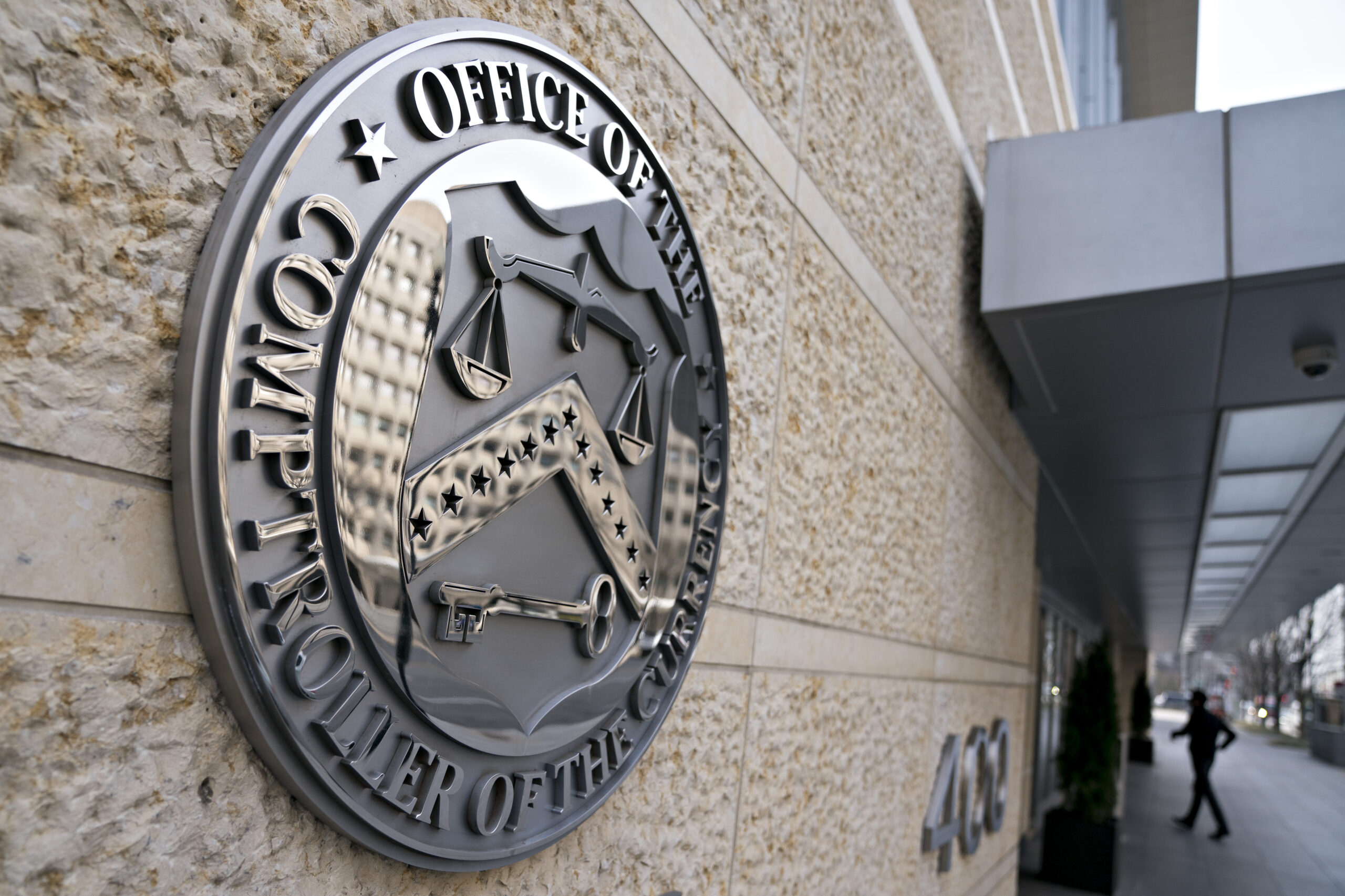
The complaint, filed Oct. 2 in the U.S. District Court for the District of Columbia, challenges the OCC’s March 2026 national bank chartering rule, Interpretive Letter No. 1176 and the conditional approval granted to digital asset firm Protego. ICBA is asking the court to invalidate the rule and guidance, block the OCC from using them to approve further charters and vacate Protego’s approval.
The lawsuit turns an increasingly public dispute between traditional banks and crypto companies into a direct legal challenge to one of the industry’s main routes into federal banking supervision. FinanceFeeds previously reported that banking groups were considering litigation over the OCC’s crypto charter policy after a series of approvals for digital asset firms.
What Exactly Is ICBA Challenging?
ICBA’s central argument is that Congress authorized the OCC to charter limited-purpose trust banks to perform fiduciary functions, not to give non-depository companies a national bank charter for extensive non-fiduciary businesses such as crypto trading, lending and asset administration.
The complaint says the OCC has approved or conditionally approved 21 national trust banks under the disputed framework, at least 13 of which ICBA identifies as crypto companies. The group argues that those institutions can compete nationally while avoiding some obligations that apply to insured commercial banks, including Community Reinvestment Act requirements and FDIC insurance.
ICBA President and CEO Rebeca Romero Rainey said Congress did not create the trust charter as a route for crypto firms to obtain the credibility of a federal bank charter without the full regulatory framework applied to insured depository institutions.
The OCC has taken the opposite legal position. Its March final rule states that national trust banks may conduct non-fiduciary activities that are part of the operations of a trust company and activities related to those operations. The agency said the rule clarified longstanding authority rather than expanding or reducing its chartering powers.
Investor Takeaway
The lawsuit targets the legal foundation supporting multiple crypto trust-bank approvals, not merely one company’s application. A ruling against the OCC could therefore affect the regulatory strategy of several custody, stablecoin and digital asset infrastructure providers seeking a single federal charter.
Why Is Protego Central to the Case?
Although the complaint attacks the broader OCC framework, it separately asks the court to vacate Protego’s conditional approval.
ICBA says Protego plans to provide crypto custody, trading, lending and borrowing, and issuer services, with much of that activity conducted outside a fiduciary capacity. The group argues that this demonstrates why the OCC’s interpretation stretches the national trust structure beyond what Congress authorized.
The legal challenge follows earlier opposition to individual applications. ICBA previously urged the OCC to reject Coinbase’s national trust charter application, raising similar questions over competitive treatment, risk and the scope of permitted activities.
The industry’s federal charter push has nevertheless continued. In December 2025, the OCC conditionally approved applications involving Ripple, Circle, BitGo, Fidelity Digital Assets and Paxos, creating a much wider federal route for crypto custody and stablecoin businesses. FinanceFeeds covered the initial wave of OCC crypto trust approvals.
Investor Takeaway
Protego matters because it gives the court a specific charter decision to review alongside the broader rule. That could make the case consequential both for the OCC’s general authority and for individual firms already relying on conditional approvals.
Are National Trust Banks the Same as Commercial Banks?
No. National trust banks are federally chartered and supervised by the OCC, but the crypto-focused structures at issue generally do not accept conventional deposits or make commercial loans and their digital assets are not protected by FDIC deposit insurance.
That distinction is central to both sides of the dispute. Crypto companies value the structure because it can provide federal supervision for custody, stablecoins and related infrastructure without turning them into conventional deposit-taking banks. Banking groups argue that the same structure allows crypto firms to compete for assets and financial relationships without bearing equivalent regulatory costs.
Those concerns had already prompted the American Bankers Association to ask the OCC to pause additional crypto trust approvals earlier this year while questions involving capital, liquidity, resolution and the GENIUS Act remained under discussion.
What Could the Lawsuit Change for Crypto Banking?
The immediate question is whether the court accepts ICBA’s interpretation of the National Bank Act or the OCC’s view that trust companies may conduct related non-fiduciary activities under a national charter.
The commercial stakes have increased as more crypto and fintech companies pursue the structure. The OCC has continued processing applications in 2026, with firms including Coinbase, Crypto.com, Block, Zerohash and others seeking or receiving varying stages of approval. Stablecoin infrastructure provider Bastion became one of the latest firms to receive preliminary OCC approval for a national trust bank in September.
Investor Takeaway
The practical issue is whether the national trust charter remains a scalable federal licensing route for crypto custody and infrastructure. Until the court addresses ICBA’s claims, applicants face a new layer of legal uncertainty even as the OCC continues supervising and processing digital asset charter applications.