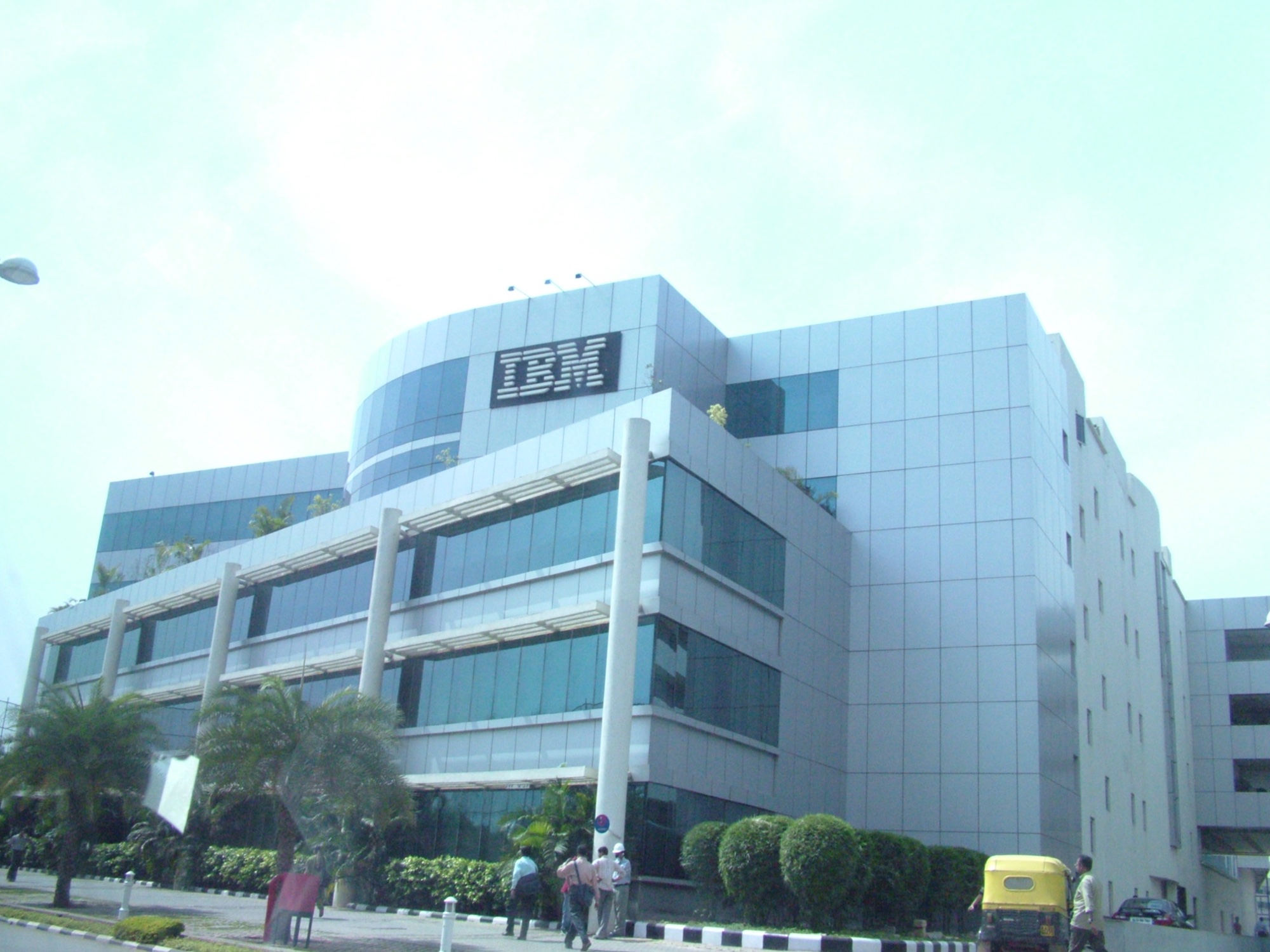
IBM’s third-quarter beat did not retire the July crash. From Thursday’s official Nasdaq close of $252.11, the path through the 31 December 2026 session is a bull of $360.48, a base of $243.68, and a bear of $187.69. The July pair of $288 and $175 is not reused. The 14 July drop, from $290.23 to $217.07, is still inside the last 90 daily log-returns, and that one session is 66.7 percent of their summed squares. Software rebounded. It did not replace the volatility window.
James Kavanaugh said about two thirds of the large deals that slipped in the second quarter closed in the third, and that full-year software growth is now about 7 percent to 8 percent. IBM left constant-currency revenue growth at 4 percent to 5 percent. IBM Z fell 20 percent. GAAP net income rose 26 percent while operating earnings per share rose 11 percent to $2.95, because the tax provision fell from $686 million to $298 million. Thursday’s cash close was only $0.65 above Wednesday.
Key facts
- Thursday 22 October 2026 official close $252.11, up $0.65 from Wednesday’s $251.46, a close that printed before the 5:00 p.m. ET call. Source: Nasdaq daily history, 23 October 2026, Nasdaq IBM historical.
- The 20-day average is $229.27 and the 50-day average is $232.71. The close is 10.0 percent above the 20-day line and 8.3 percent above the 50-day line. Same Nasdaq file, 23 October 2026.
- Operating earnings per share $2.95, up 11 percent. Revenue $17.103 billion, up 5 percent, or 6 percent at constant currency. Software $7.804 billion, up 8.2 percent. Source: IBM’s 21 October 2026 release.
- Full-year software growth is about 7 percent to 8 percent. Company revenue growth stays at 4 percent to 5 percent. Free cash flow is expected to rise by more than $1 billion. Source: Kavanaugh’s prepared remarks, 21 October 2026.
- IBM Z fell 20 percent. Distributed infrastructure rose 31 percent. Transaction processing rose 9 percent, and the full-year guide for that line is now flat. IBM release, 21 October 2026.
- Debt was $63.8 billion, including $12.7 billion of financing debt. Cash and marketable securities were $11.1 billion, down $3.4 billion from year-end 2025, after $11.4 billion of acquisitions. IBM release, 21 October 2026.
- Goldman Sachs is at $300, UBS at $243, and MarketBeat’s average at $260.28. Those are Street numbers. The title bull of $360.48 and bear of $187.69 are the distribution below. Sources: StockAnalysis and MarketBeat, 22 October 2026.
- At 6:21 a.m. ET on 23 October 2026 the Nasdaq quote page showed a last sale of $249.30, down $2.81, or 1.11 percent. That clocked print is not a close and is not the spot.
What just happened, and why the obvious reading is wrong
The obvious reading is that IBM beat on Wednesday night and the stock voted for software. The tape does not say that. Wednesday’s regular session closed at $251.46, up 3.9 percent from Tuesday’s $241.92, and the call was set for 5:00 p.m. ET, after that cash close. Thursday, the first completed session after the release, traded from $240.00 to $256.30 and finished at $252.11. Volume was 11.6 million shares, about twice the prior 20-session average in the saved file.
David Buik posted on 22 October that shares were down 4.64 percent after hours, beside 6 percent revenue growth and a $24.9 billion software book. That after-hours figure is his post, not a Nasdaq daily bar, and it did not survive into Thursday’s close. First Squawk posted the print on 21 October: operating earnings of $2.95 against $2.86, revenue of $17.10 billion against $16.83 billion, and software of $7.80 billion against $7.64 billion. The release table is $17,103 million of revenue and $7,804 million of software, up 8.2 percent, or 8.7 percent at constant currency.
The second wrong reading is that the software rebound is a new run-rate. Kavanaugh said constant-currency software growth accelerated four points sequentially to 9 percent, with over four points organic, and that annual recurring revenue grew 8 percent to $24.9 billion. He also cited “the successful closure of around two thirds of the large deals that slipped from the second quarter.” Full-year software growth is about 7 percent to 8 percent, about 7 percent as the base case, and transaction processing is guided only to flat. A 10 percent constant-currency quarter is not the year.
The segments are not one speed. Hybrid cloud, which is Red Hat, grew 11 percent. Data grew 19 percent, or 20 percent at constant currency. Automation fell 3 percent. Infrastructure rose 4 percent to $3.707 billion, but IBM Z fell 20 percent and distributed infrastructure rose 31 percent. Consulting was $5.335 billion, up 0.2 percent, which the release calls flat.
Who is exposed
The equity exposure is the NYSE common share. The quarter’s weighted-average basic count was 944.4 million shares. Times Thursday’s $252.11, that is $238.1 billion. The diluted count was 953.5 million, or $240.4 billion on the same close. That is the reported average times the cash close, not a live shares-outstanding print.
Income holders have a date. The board approved $1.69 a share, record date 10 November 2026, payment 10 December 2026, a quarterly dividend IBM dates to 1916. Third-quarter dividends paid were $1.596 billion, equal to $1.69 times those 944.4 million shares. Debt was $63.8 billion, including $12.7 billion of financing receivables Kavanaugh said are almost 80 percent investment grade. Cash and securities were $11.1 billion after $11.4 billion of acquisitions.
Krishna said AT&T and General Motors are among 16 enterprise quantum engagements this year. He tied Red Hat and Google to the llm-d project and HashiCorp Vault to the NVIDIA Open Agent Safety Platform. Kavanaugh cited OpenAI and an expanded Google Cloud relationship. OpenShift is a $2.4 billion annual recurring revenue business, with growth he put above 30 percent. Lightwell’s pipeline is approaching $700 million. About 85 percent of installed MIPS are maintaining or growing, and z17 has produced more than $1 billion of incremental revenue over six quarters versus the prior program. The 2-to-15 times cost claim is his.
FinanceFeeds has covered IBM’s work with Mizuho and the point that IBM does not run a crypto exchange. Year-end maths here for Oracle, Intel, and Microsoft are separate calculations. Salesforce coverage here asks whether AI spend is rotating inside software budgets.
What the tape and the primary documents show
Thursday’s close is 10.0 percent above the 20-day average of $229.27 and 8.3 percent above the 50-day average of $232.71, and $0.36 above the prior five-session high of $251.75. The five sessions from 15 through 21 October bottomed at $226.01, so the close is $26.10 above that low. The closes used here are Thursday’s completed prints. The file high is $332.46 on 2 June and the low is $199.19 on 23 July. Thursday is 14.9 percent under the 31 December 2025 close of $296.21, and the bear at $187.69 would be a new low.
| Measure | What it is not | Source and date | |
|---|---|---|---|
| Spot | $252.11 | Not Wednesday’s $251.46, and not the Friday 6:21 a.m. ET last sale of $249.30 | Nasdaq daily file, 22 October 2026 |
| 20-day and 50-day | $229.27 and $232.71 | Not targets | Averages of the same closes |
| Operating EPS and revenue | $2.95 and $17.103 billion | Not GAAP diluted EPS of $2.30 | IBM release, 21 October 2026 |
| Software | $7.804 billion, up 8.2 percent | Not the 7 percent to 8 percent full-year guide | IBM segment table, 21 October 2026 |
| Software book | $24.9 billion, up 8 percent | Not quarterly revenue | Kavanaugh remarks, 21 October 2026 |
| IBM Z | Down 20 percent | Not the infrastructure segment, which rose 4 percent | IBM release, 21 October 2026 |
| Street marks | Goldman $300, UBS $243, MarketBeat average $260.28 | Not the title bull or bear | StockAnalysis and MarketBeat, 22 October 2026 |
Estimate pages do not share one hurdle. First Squawk used $2.86 and $16.83 billion. SiliconANGLE used $2.86, $16.82 billion, and $7.66 billion of software. Zacks used $2.88 and $16.87 billion and said $2.95 beat by 2.4 percent.
What IBM and the analysts have said
Arvind Krishna, IBM chairman, president and chief executive officer, said in the 21 October release: “Our clients are now deploying Super Intelligence in ways that transform entire operating models, instead of simply addressing narrow or novel problems.” He said free cash flow should now increase by more than $1 billion. The prior wording was approximately $1 billion. The raise is the word “more.” In the remarks he said second-quarter transaction-processing softness “reflected timing rather than underlying demand.”
James Kavanaugh, IBM senior vice president and chief financial officer, said in the release: “Demand across our portfolio combined with strong operational execution led to accelerated growth and solid operating pre-tax margin expansion in the quarter.” In the remarks he set the software range: “We now expect full-year Software growth of approximately 7% to 8%, with about 7% as the revised base case.” He said AI is about 30 percent of consulting revenue and about 35 percent of the backlog. The release shows consulting gross margin at 27.4 percent, against 29.3 percent a year earlier.
SiliconANGLE quoted Holger Mueller of Constellation Research, who said software “only grew 8%” and that this was “not nearly the kind of growth you’d expect,” and that Krishna is under pressure to close the year strongly. The page does not print his job title, so this desk is not inventing one.
The 22 October moves this desk could read still cluster near the spot. StockAnalysis, citing TipRanks, listed BMO’s Keith Bachman at $265 from $230, Truist’s Arvind Ramnani at $260 from $240, Stifel’s David Grossman at $260 from $235, RBC’s Matthew Swanson at $270, Goldman’s James Schneider at $300 from $270, Susquehanna’s James Friedman at $256 from $253, J.P. Morgan’s Brian Essex at $269 from $250, and UBS’s David Vogt at $243 from $236. BMO, Truist, Susquehanna and UBS were holds. The others were buys. A post the same day said Baird stayed neutral and moved to $260 from $230. MarketBeat reported that Baird move and an average of $260.28 from 20 buys, 12 holds and two sells. Goldman’s $300 is $60.48 under the formula bull. UBS at $243 is $0.68 under the drift-only base. That proximity is a coincidence. The July pair of $288 and $175 is not reused.
Where the financing and the rules sit
The earnings jump screens will quote is not the operating jump. GAAP net income was $2.190 billion, against $1.744 billion, up 26 percent. Diluted earnings were $2.30. Operating earnings were $2.95, up 11 percent. The tax provision was $298 million, against $686 million, and the effective rate was 11.9 percent, against 28.2 percent. GAAP pre-tax income rose 3 percent, to $2.497 billion. Operating pre-tax income was $3.295 billion, up 9 percent. Kavanaugh’s full-year operating tax rate is the mid-teens, not 11.9 percent.
GAAP gross margin was 56.8 percent, down 50 basis points. Operating gross margin was 58.5 percent, down 20 basis points. SiliconANGLE said that 58.5 percent was under a 59.1 percent consensus. Software gross margin was 82.5 percent, against 83.1 percent, while the software segment profit margin rose to 35.0 percent from 32.9 percent. Infrastructure’s segment profit margin rose to 19.3 percent from 18.1 percent. Consulting’s fell to 12.2 percent from 12.9 percent. Research and development was $2.378 billion, against $2.082 billion.
Cash flow is the line management raised. Third-quarter free cash flow was $3.0 billion, up $0.7 billion. Nine-month free cash flow was $7.8 billion in the release, up $0.6 billion. The remarks round that to about $8 billion and about $600 million. Kavanaugh still anchors the year to a 4 percent revenue case and about 100 basis points of operating pre-tax margin expansion. Krishna’s $1 billion Department of Commerce award, the Poughkeepsie plant, and DARPA Stage C are not a segment revenue line. Quantum Day is 10 December 2026.
Bull, base, and bear
The title prices are a distribution around Thursday’s close, not a copied target. The last 90 daily log-returns run from the 15 June 2026 close through 22 October 2026. Mu is -0.00070852. Sigma, the sample standard deviation, divides by 89 and is 0.03768035. N is 48 sessions through 31 December 2026. October has six left: the 23rd, then 26 through 30. November has 20, with 26 November shut and the 27 November early close counted. December has 22, with 25 December shut and the 24 December early close counted.
The square root of 48 is 6.928203. Drift is N times mu, or -0.034009. One standard deviation across the window is 0.261057. One and a half is 0.391586. The base is $252.11 times exp(-0.034009), or $243.68, 3.3 percent under the spot. The bull is $252.11 times exp(-0.034009 + 0.391586), or $360.48, 43.0 percent over the spot. The bear is $252.11 times exp(-0.034009 – 0.261057), or $187.69, 25.6 percent under the spot. The bull stays above the spot, so the no-drift fallback is not used.
The 14 July session sets the width. The close fell from $290.23 to $217.07, down 25.2 percent, a log-return of -0.29045. That one term is 66.7 percent of the summed squares. Sigma without that day would be about 0.0217. This calculation does not drop the day. The bear at $187.69 is the one-sigma downside with July left in.
| Case | Price | Versus the $252.11 spot | What has to be true |
|---|---|---|---|
| Bull | $360.48 | Plus 43.0 percent | Forty-eight sessions deliver the drift plus 1.5 standard deviations. Software holds the top of the 7 percent to 8 percent guide, and IBM Z stops subtracting. Goldman’s $300 is not this case. |
| Base | $243.68 | Minus 3.3 percent | Only the drift arrives. It is slightly negative because July is in the window. Revenue stays inside 4 percent to 5 percent and transaction processing finishes flat. UBS at $243 is a separate number. |
| Bear | $187.69 | Minus 25.6 percent | The path is the drift minus one standard deviation, another air pocket on the scale of 14 July. The stock would undercut the $199.19 low from 23 July. |
The $288 and $175 pair is not a collision, so the horizon stays 31 December. Street targets above are a separate comparison.
What happens next
The dividend record date is 10 November 2026. The board has already approved $1.69. Nothing in the release ties that cheque to the software guide. If the basic count stays near 944.4 million, the cash that leaves on 10 December is about $1.60 billion, in line with the third quarter. A cut would be a new decision.
Quantum Day is 10 December 2026, the same day the dividend is paid. Krishna said IBM will discuss the roadmap then, after the Commerce award, the Poughkeepsie plant, DARPA Stage C, and the 16 engagements that include AT&T and General Motors. The segment table has no quantum revenue line. A milestone without sales or cash does not move the $243.68 base.
The model ends at the 31 December 2026 close, 48 sessions from Thursday. If software lands on the 7 percent base case and IBM Z does not reverse a 20 percent decline, the drift-only destination is $243.68. Reaching $360.48 needs the extra 1.5-sigma term, wider than any target in the StockAnalysis rows fetched on 22 October. Reaching $187.69 needs something on the order of another July gap.
Frequently asked questions
Where do IBM shares sit through 31 December 2026 after the July $288 and $175 pair?
The fresh bull is $360.48 and the fresh bear is $187.69, with a base of $243.68, all from Thursday’s $252.11 Nasdaq close. The July pair is not reused. N is 48 sessions, counting the early closes on 27 November and 24 December and skipping only Thanksgiving and Christmas. The drift is slightly negative, so the base sits under the close.
Did the software beat erase the July decline?
No. Thursday’s close is 13.1 percent under the 13 July close of $290.23 and 23.4 percent under the 2 June close of $329.23. Software revenue rose 8.2 percent, and Kavanaugh said about two thirds of the slipped large deals closed. IBM Z fell 20 percent. The company did not lift the 4 percent to 5 percent revenue range.
Why is the bull so far above the analyst targets?
The bull is the close times the exponential of 48 sessions of drift plus 1.5 standard deviations. It is not Goldman’s $300 and not the $260.28 average MarketBeat reported. July 14 is 66.7 percent of the summed squared log-returns, so one session widens both tails. A named analyst target is a separate number. UBS at $243 happens to sit near the drift-only base.
What did management actually raise?
Free cash flow growth, to more than $1 billion year over year, and software growth, to about 7 percent to 8 percent with a 7 percent base case. Transaction processing for the full year is now expected to be flat, after a 10 percent constant-currency quarter. Company revenue growth stayed at 4 percent to 5 percent. The quarterly dividend stayed at $1.69.
Who carries this print if it goes wrong?
Holders of the NYSE common stock are the equity exposure. On the quarter’s 944.4 million basic shares, Thursday’s close is about $238.1 billion. Financing debt is $12.7 billion inside $63.8 billion of total debt, against $11.1 billion of cash and securities. The remarks name AT&T, General Motors, Google, OpenAI and NVIDIA as relationships, not as a revenue guarantee.
Is the Friday morning print the spot?
No. The spot is Thursday’s completed Nasdaq close of $252.11. At 6:21 a.m. ET on 23 October 2026 the Nasdaq quote page showed a last sale of $249.30, down $2.81, or 1.11 percent. That is a live print with a clock. It is not a daily bar and it is not an input to the bull, the base, or the bear.
This is not financial advice.