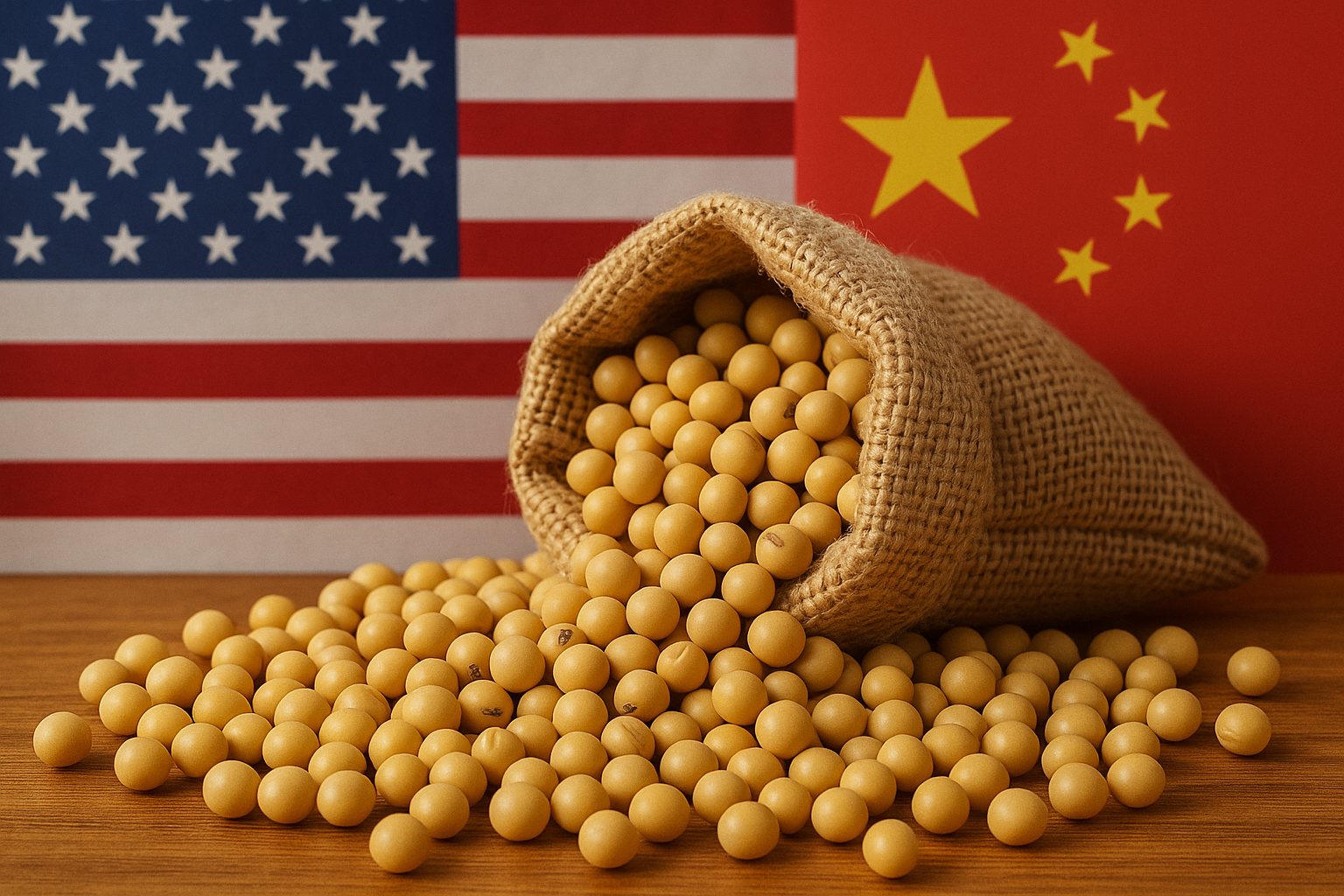
China’s appetite for US soybeans has waned just weeks after Washington declared a breakthrough in trade relations.
Despite the easing of import tariffs and removal of key bans on American suppliers, shipments have come to a near halt.
According to a Bloomberg exclusive, this unexpected drop follows Beijing’s initial flurry of purchases in late October, which US officials promoted as signs of a recovering trade channel between the world’s largest economies.
But the optimism from Washington has not been matched by consistent buying from Beijing. Instead, Chinese importers appear to be holding back.
The lack of fresh deals has raised doubts over whether China will meet the projected import volumes of 12 million tonnes by the end of the year, targets that remain unconfirmed by Chinese authorities.
Trade deal targets in doubt
Washington previously stated, notes Bloomberg, that China committed to importing 12 million tonnes of US soybeans by December and 25 million tonnes annually for the next three years.
Yet, traders with knowledge of recent activity say they haven’t seen new purchases since the initial wave in October.
Though Beijing hasn’t publicly confirmed those exact numbers, it has taken steps to show goodwill. Import tariffs on American soybeans were lowered, and bans were lifted on three US exporters, including CHS Inc.
These measures came after the US took similar steps to ease tensions in recent trade negotiations. Industry insiders, however, view the 12-million-tonne commitment as more symbolic than practical.
With the bulk of recent Chinese buying focused on South American beans, especially from Brazil, experts say demand from China for US soybeans will likely remain subdued.
Brazil leads in supply
Experts point to Brazil’s consistent planting season and reliable output as the key reason behind China’s shift away from US beans.
Rabobank grain analyst Vitor Pistoia told Bloomberg that China’s heavy grain purchases from South America earlier this year have already met much of its near-term demand.
Chinese crushers, companies that process soybeans into meal and oil, will still need to buy some volumes for delivery in December and January.
However, these purchases are expected to remain in the low millions of tonnes, far below the US target. With Brazil’s new crop expected to arrive from late January onwards, the window for US shipments is quickly closing.
Cost is also a critical factor. US soybeans continue to carry a 13% tariff, even after recent relief measures.
When factoring in processing costs, traders say Chinese commercial crushers face considerable financial losses if they opt for US cargoes.
This, combined with the current premium on American beans compared to South American offerings, has left many buyers hesitant.
State buyers dominate
Recent purchases from China have largely come from state-owned enterprises. According to traders, much of this volume is believed to be directed to government stockpiles, not the commercial market.
This indicates a split in strategy, where state actors fulfil political or strategic objectives while private firms remain focused on price and profit.
While the trade deal has technically reopened the path for US soybeans to enter China, competition from Brazil continues to undercut American supply.
With Brazil’s shipments due soon and global prices remaining volatile, Chinese commercial importers have little reason to commit to large volumes from the US.
Traders say that unless there are major price corrections or stronger policy support from Beijing, US exporters may struggle to regain their previous market share in China, regardless of diplomatic efforts.
Outlook weakens for US exporters
Despite easing tensions and improved trade terms, US soybean sales to China are now facing more than just tariffs. Market dynamics, supply patterns, and ongoing price differences are all playing against American producers.
For now, state-linked purchases may keep some flow alive, but commercial deals remain thin.
Whether Beijing will ramp up imports to meet the full 12-million-tonne goal remains unclear.
What is certain is that China’s demand for US soybeans isn’t accelerating as fast as the US administration had anticipated.
With Brazil’s crops set to dominate early 2025 supply, American sellers may find the current truce alone is not enough to revive their once-dominant role in Chinese markets.
The post China’s soybean demand for US slows despite trade breakthrough appeared first on Invezz