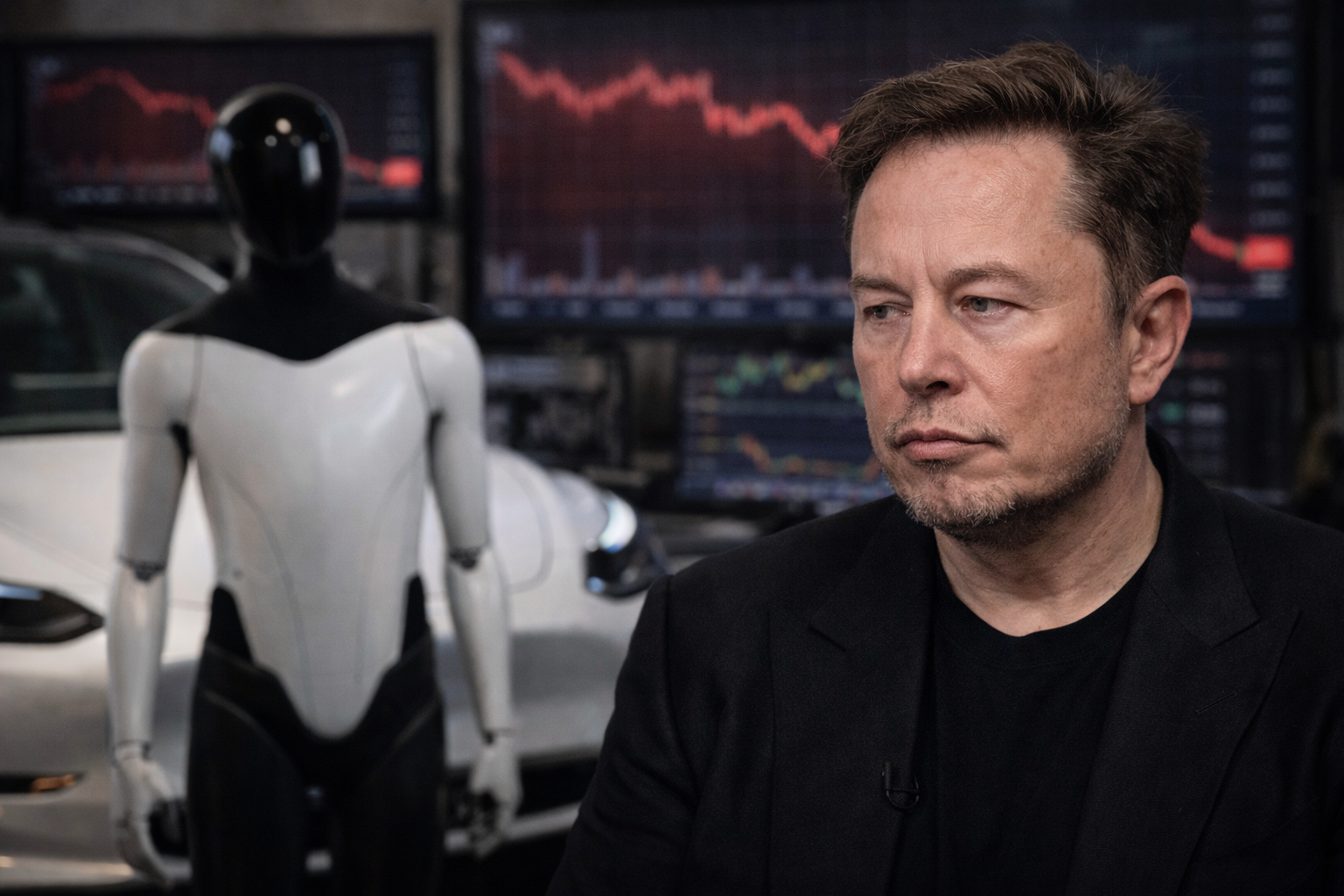
Tesla stock continued to decline on Thursday, falling more than 3% and extending a recent sell-off as investors assessed mounting evidence of weakening demand and strategic uncertainty.
The stock slipped to around $392.62, bringing its year-to-date decline to about 10% and marking a difficult start to 2026.
While Tesla remains the most prominent name in the global electric vehicle industry, a combination of slowing sales, intensifying competition, and its expanding focus on robotics and artificial intelligence has unsettled investors.
Chief Executive Officer Elon Musk has increasingly positioned Tesla as an AI and robotics company, rather than primarily an automaker.
However, market sentiment has remained cautious, with most analysts maintaining cautious outlook amid concerns over near-term earnings visibility and execution risks.
Delivery slowdown weighs on sentiment
One of the central challenges facing Tesla is declining vehicle demand.
In 2025, the company recorded its largest annual drop in deliveries on record, with total shipments falling to about 1.63 million vehicles.
Early data from January 2026 suggests that the slowdown has continued into the new year.
In Norway, traditionally one of Tesla’s strongest European markets, sales fell by roughly 88% year on year.
New vehicle registration data for January 2026 showed that Tesla’s Model Y recorded just 62 registrations in Norway, accounting for around 2.8% of total new car sales.
Across its lineup, Tesla sold 83 vehicles in the country, representing an 88% decline from the same period a year earlier.
In France, Tesla sold just 661 vehicles during the month, highlighting the scale of the decline in one of Europe’s largest auto markets.
The company’s Cybertruck has also failed to meet earlier expectations. Tesla sold about 20,000 units of the vehicle in 2025, far below the earlier target of 250,000 units outlined by Musk.
Analysts have cited production constraints, pricing issues and softer-than-expected demand as contributing factors.
Meanwhile, rivals have gained ground. Volkswagen’s ID.3 model led the Norwegian sales rankings with 299 units sold, nearly five times Tesla’s total for the month.
The data highlights the extent to which competition from European and Asian manufacturers is intensifying, particularly in mature EV markets where consumer choice has expanded rapidly.
Balancing ambition and execution risks
Tesla’s current trajectory reflects a growing tension between its long-term ambitions and near-term operational realities.
While the company continues to invest heavily in AI, robotics and autonomous driving, its core automotive business is facing slowing demand, margin pressure and rising competition.
Investors are also weighing the risks associated with Tesla’s strategic shift away from traditional vehicle manufacturing toward emerging technologies that remain commercially uncertain.
For now, the combination of falling deliveries, weak European sales data and subdued analyst sentiment has kept pressure on the stock.
Market participants are likely to remain focused on whether Tesla can stabilise demand and translate its technology investments into sustainable earnings growth in the coming quarters.
Until clearer signs of recovery emerge, Tesla’s shares are likely to remain sensitive to sales trends, competitive dynamics and developments around its evolving business model.
The post Why Tesla stock is slipping around 3% today appeared first on Invezz