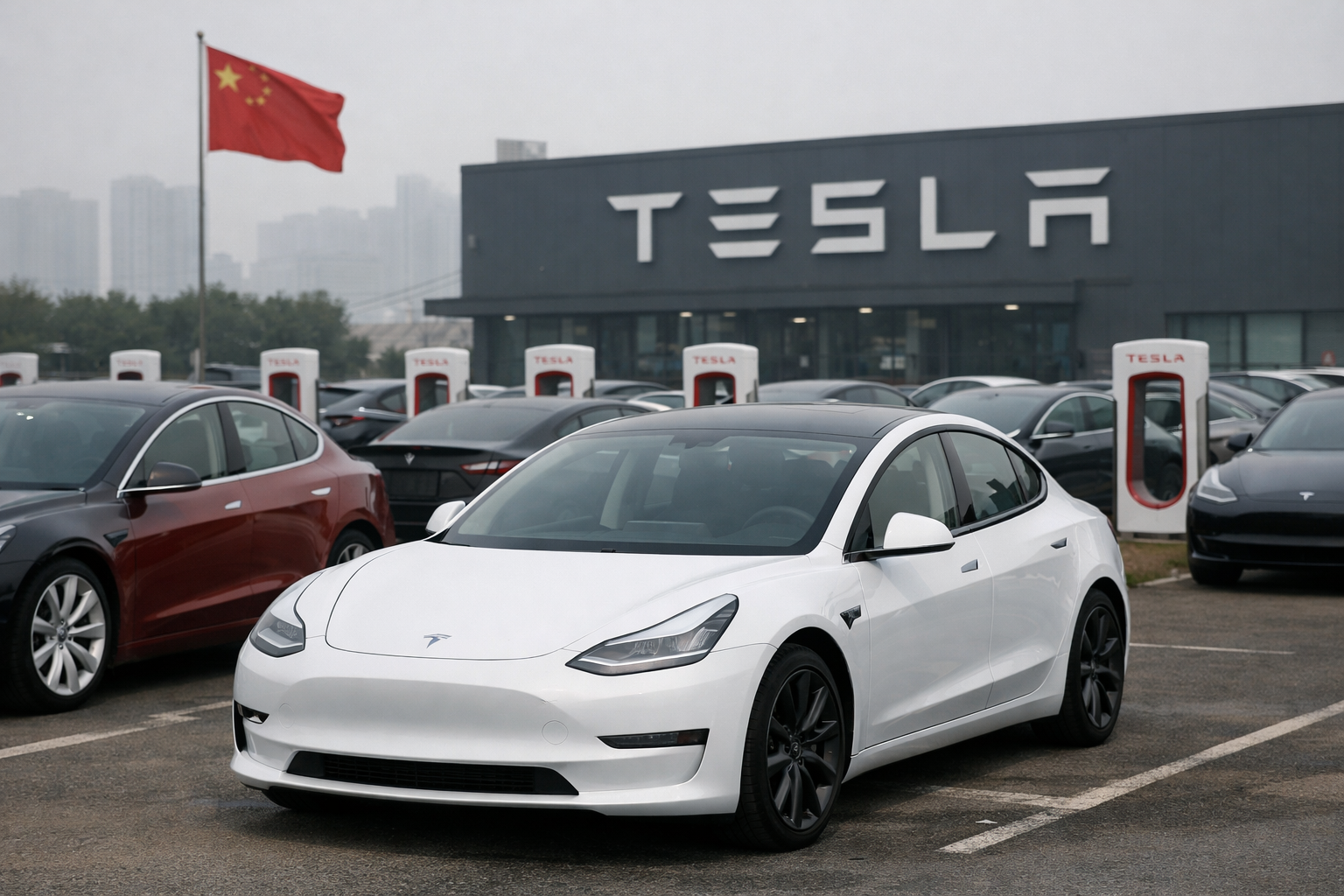
Tesla stock declined at the start of the new trading week, as investors assessed intensifying competition in autonomous driving and continued weakness in electric-vehicle demand.
Tesla stock was down about 2% at $408.60 in early trading.
The S&P 500 and the Dow Jones Industrial Average were each lower by around 1%.
The move came as Uber Technologies announced a new suite of services aimed at helping autonomous vehicle developers integrate their fleets into its ride-hailing network.
Uber expands Robotaxi platform
Uber said its new Autonomous Solutions platform will provide a “comprehensive suite” of services to robotaxi developers, including AI training data, fleet management, user experience design, regulatory support, and financing.
The initiative reflects Uber’s strategy of partnering with autonomous vehicle developers rather than building its own vehicles.
The company has said that access to its demand-forecasting tools and more than 200 million regular users can help offset the high costs of developing self-driving technology.
The move signals a more aggressive effort to expand robotaxi services on Uber’s platform, as concerns about competition from Tesla and Google-backed Waymo have weighed on Uber’s shares in recent months.
Recent performance and US market trends
Tesla shares fell 1.3% last week, despite rising for three consecutive sessions to end the period.
The stock gained only $1.19, or 0.3%, over those three days, marking its third weekly decline in the past four weeks.
Weakness in the broader US EV market has added pressure. US electric-vehicle sales plunged 30% year on year in January, accounting for about 6% of total new car sales.
The expiration of the $7,500 federal EV purchase tax credit at the end of September has weighed on demand.
Automakers have responded by cutting prices, with average EV selling prices falling 3% year on year in December.
Cantor Fitzgerald analyst Andres Sheppard has described lower pricing as a “major theme” expected to persist this year.
Market share gains offer limited relief
Despite weaker overall demand, Tesla has gained market share.
Its January sales declined 17%, less than the broader market, lifting its share to about 61%, up from 57% in December.
When the tax credit was still active, Tesla’s share had fallen below 50%.
Entering Monday’s session, Tesla shares were down about 8% for the year but remained up 22% over the past 12 months, outperforming the S&P 500 by roughly seven percentage points.
Investors have largely focused on Tesla’s artificial intelligence ambitions rather than short-term vehicle sales.
The company launched a robo-taxi service in Austin in June, when its shares were trading near $322.
However, the car business remains critical. Tesla plans to spend about $20 billion on new equipment this year, more than double its typical annual capital expenditure, to expand production of robotaxis and robotics.
Intensifying competition in China
Tesla is also facing mounting pressure in China, the world’s largest EV market, where low-cost domestic models have gained ground.
In 2025, Geely Auto sold more than 459,000 units of its Xingyuan EV, while Wuling Motor Holdings recorded 427,000 sales of its Hongguang Mini EV. Both models are priced below 100,000 yuan.
Tesla’s Model Y ranked third, with sales falling nearly 21% year on year to 382,300 units, despite the company introducing new payment schemes.
BYD’s Seagull dropped to fourth place after a 31% sales decline.
Chinese policymakers have urged automakers to curb aggressive discounting amid deflationary pressures.
In mid-February, the State Administration for Market Regulation banned sales of new vehicles below production cost, including through subsidies.
Demand has also weakened. Nomura said passenger EV sales fell nearly 20% year on year in January to 596,000 units, while market penetration dropped to 38.3%.
The bank cited the phasing out of tax incentives as a contributing factor.
Since January, buyers have been subject to a 5% purchase tax, which is scheduled to rise to 10% in 2028.
The post Why Tesla stock is down over 2% on Monday appeared first on Invezz