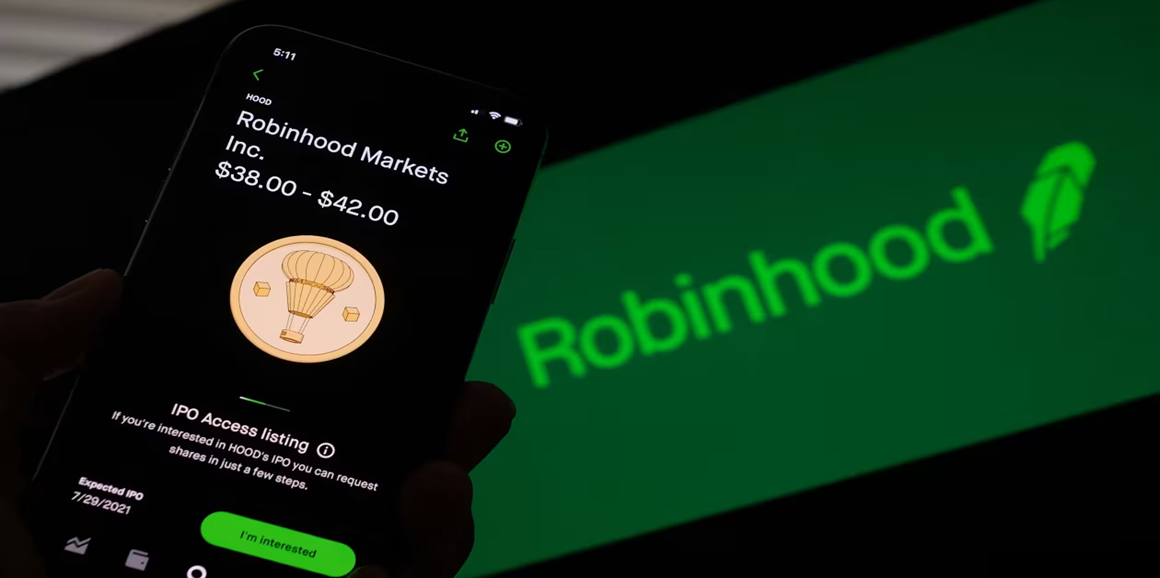
Robinhood is bringing a second venture fund to the public market. Robinhood Ventures Fund II, ticker RVII, is expected to list on the New York Stock Exchange on August 13 at $25 a share, with the window to request IPO shares closing August 12. It packages stakes in roughly 80 early-stage private companies into something any Robinhood customer can buy on the same app they use to trade stocks.
The pitch is access: private startups have historically been walled off from ordinary investors, and Robinhood is tearing down the wall. The catch is structural, and the first fund shows exactly what it looks like. RVI listed in March and, within weeks, traded at nearly double the value of the assets it held. That premium is the appeal and the warning in a single number.
What RVII Is, and What It Holds
RVII is a business development company, a type of closed-end fund regulated under the Investment Company Act of 1940. It plans to hold a diversified portfolio of about 80 early- and growth-stage private companies, with a focus on current and former participants in the Y Combinator startup accelerator. The offering is for up to 8 million shares at $25, raising roughly $200 million, with Robinhood Markets itself selling 400,000 of those shares.
The structure is not incidental; it is the only legal way to do this. The SEC requires that retail-accessible vehicles holding more than 15% in illiquid private securities use the closed-end structure, because private-startup stakes cannot be redeemed on demand the way an ETF’s holdings can. That has a direct consequence for buyers: RVII shareholders cannot redeem their shares from the fund. To exit, they must sell to another investor on the NYSE at whatever price the market sets, which may be well above or below the value of the underlying holdings.
The fund charges a 2% annual management fee plus a 20% incentive fee on realized capital gains, a hedge-fund-style fee structure applied to a retail product. The fund’s net asset value, the per-share worth of its private holdings, is calculated by Robinhood Ventures itself, not set by an open market, since the underlying companies do not trade publicly.
The Timing and What Q2 Bought Them
RVII arrives in a week when Robinhood is moving from strength. The company reported record second-quarter revenue of $1.31 billion, up more than 32% year over year and ahead of estimates, with earnings of $0.62 a share. The stock rose on the print, though it remains down about 15% over the past month and 18% year-to-date, a bounce inside a longer decline rather than an uninterrupted climb.
Robinhood Markets (HOOD) rose after its Q2 earnings beat but trades well below its mid-July levels near $120, down about 15% on the month. Source: TradingViewThe launch fits a clear pattern. Robinhood has spent 2026 converting one adjacent asset class after another into a retail product on its app, from tokenized stocks on its own blockchain to prediction markets to crypto services abroad. RVII extends that playbook to private-company equity, the last major asset class still largely closed to ordinary investors. Whether that is democratization or the packaging of hard-to-value risk for retail depends largely on price, which is where the first fund’s record becomes instructive.
The Precedent: RVI Soared, and That’s the Problem
Robinhood Ventures Fund I is the tell, and its full arc is the warning. It listed on March 6 at $25 against a NAV of $24.70, roughly fair value, then surged to nearly $77 by late May, a premium of almost 90% over the value of its holdings. Anyone who bought at the IPO and sold near the peak made a fortune. Anyone who bought the peak did not.
Robinhood Ventures Fund I (RVI) surged from its $25 listing to nearly $77 in May, then fell back below $28 by August as the premium to net asset value collapsed. Source: TradingViewThe round trip is the lesson. RVI’s rise was driven by what it held, with SpaceX, OpenAI and Anthropic among its largest positions, all headed toward public listings, and the excitement pushed the price far above the underlying value. Then it reversed, and by August the fund traded near $28, a fraction of its peak and back in the region of its net asset value.
That is the closed-end-fund risk in its sharpest form: when the holdings are private and marked only periodically by the adviser, the market price can detach violently from fundamentals and then snap back. A premium is not a floor, and RVI’s holders watched roughly two-thirds of the price evaporate in three months.
Investor Takeaway
RVI’s 90% premium made early buyers money and left late buyers paying nearly double NAV, so the entry price, not the fund’s holdings, is what determines the outcome.
What to Watch at Listing
The signals are specific. The first is where RVII opens relative to its $25 NAV: a large day-one premium would echo RVI and reward early allocation while penalizing anyone buying the pop. The second is the fee drag, since 2% a year plus 20% of gains is a meaningful hurdle that compounds against returns regardless of how the holdings perform. The third is what happens to RVI itself as SpaceX, Anthropic and OpenAI move toward their actual public debuts, because that repricing is the closest thing to a live experiment in how these funds behave when private marks meet public markets.
Robinhood has built a real business out of giving retail investors access to markets that were previously closed to them, and RVII is a logical next step. But access is not the same as a good deal. The fund’s structure guarantees that its price and its value can diverge sharply, and the first fund proved they will. The question for anyone requesting shares before August 12 is not whether they can now buy private startups, it is what premium they are paying for the privilege.
Investor Takeaway
The day-one premium to the $25 NAV is the single most important number at listing, since it determines whether IPO buyers are getting fair value or paying up for access.