Why Did The U.S. Sanction Shelbit And Aban Tether?
The U.S. Treasury Department sanctioned two cryptocurrency exchanges on Friday, expanding its campaign against digital asset networks that Washington says have helped Iran move money outside the traditional banking system.
The Treasury’s Office of Foreign Assets Control targeted Shelbit Exchange and Iran-based Aban Tether, along with Shelbit operator Siavash Kayvanpour and several companies he controls in Georgia, Poland and the United Arab Emirates.
The designations are part of the Trump administration’s “Economic Fury” campaign against financial networks connected to Iran. OFAC alleged that the exchanges were used to move cryptocurrency, evade sanctions and support the Islamic Revolutionary Guard Corps and other entities subject to U.S. sanctions.
Treasury said IRGC-linked wallets sent more than $1 million in cryptocurrency to Shelbit addresses and received more than $2 million from the exchange. Wallets belonging to or controlled by Kayvanpour also transferred more than $2 million to Nobitex, Iran’s largest cryptocurrency exchange, according to the agency.
Aban Tether, which does not appear to be connected to USDT issuer Tether, processed millions of dollars in transactions involving sanctioned Iranian exchanges including Nobitex, Wallex, Bitpin and Ramzinex, Treasury said.
“The Iranian regime’s reliance on digital assets and shadow banking networks is further evidence that Economic Fury is working,” Treasury Secretary Scott Bessent said. “Whether in dollars, rials, or crypto, Treasury will hunt down and dismantle the illicit financial networks that keep the regime afloat.”
How Large Was Shelbit’s Crypto Network?
Beyond the transfers involving IRGC-linked wallets, Treasury said Shelbit serviced a network of more than 2,000 gambling websites promoted by two Iranian influencers. The agency alleged that the network was used to launder tens of millions of dollars.
Shelbit-linked wallets also moved substantial cryptocurrency to major international trading platforms. At least $676 million was transferred from wallets associated with Shelbit to Binance over a two-year period, including roughly $540 million after Dubai’s Virtual Assets Regulatory Authority fined Shelbit in January 2025 for operating without a license.
VARA took further enforcement action in July and ordered Shelbit to halt unlicensed operations. Binance has said Shelbit itself did not maintain an account on its platform and disputed the characterization of the reported transfer totals. The exchange said accounts associated with Shelbit users had been investigated, frozen and reported to authorities.
The case illustrates one of the complications facing large exchanges. Blockchain transfers can pass through multiple wallets before reaching a centralized platform, requiring compliance teams to determine whether funds are directly controlled by a sanctioned entity or merely connected through transaction history.
Investor Takeaway
The sanctions increase compliance pressure on exchanges, custodians and stablecoin issuers to identify Iranian-linked funds before they reach regulated platforms. The risk extends beyond direct accounts because blockchain exposure can emerge through connected wallets and intermediary transactions.
Why Is Crypto Becoming A Larger Sanctions Target?
Friday’s action follows several U.S. measures aimed specifically at Iran’s cryptocurrency infrastructure. In January, Treasury sanctioned Zedcex and Zedxion, the first crypto exchanges targeted under Iran-specific U.S. financial sanctions.
In June, OFAC blacklisted Nobitex and several other Iranian exchanges. Treasury said Nobitex processed more than half of all cryptocurrency inflows into Iran during 2025, making the platform a central target in Washington’s effort to restrict the country’s access to digital asset markets.
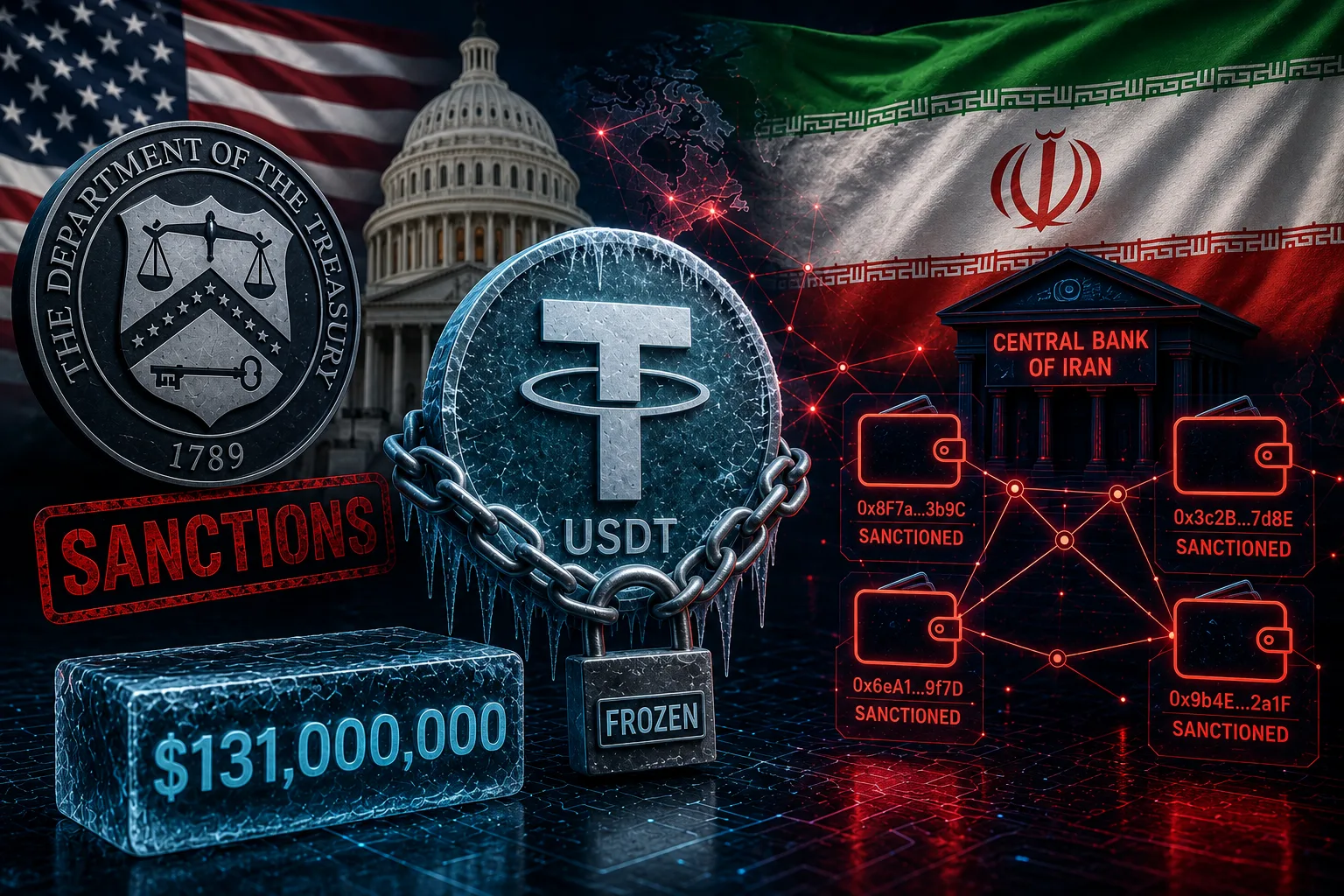
Last month, U.S. authorities also sanctioned four cryptocurrency wallets linked to Iran’s central bank. Tether subsequently froze about $131 million in USDT held in those wallets, showing how stablecoin issuers can directly restrict access to sanctioned funds when tokens include administrative freeze functions.
Cryptocurrency can give sanctioned entities an alternative when banks restrict access to foreign currencies or international payment rails. At the same time, transactions on public blockchains create permanent records that investigators can analyze to trace flows between wallets, exchanges and counterparties.
What Does The Crackdown Mean For Crypto Platforms?
The expanding sanctions campaign raises the cost of serving customers with exposure to Iran and other restricted jurisdictions. Exchanges may need to devote more resources to blockchain analytics, wallet screening and transaction monitoring as regulators focus not only on customer identities but also on the origin and destination of digital assets.
Stablecoin issuers face similar pressure. Centralized tokens such as USDT can be frozen at the issuer level, making compliance decisions increasingly important when authorities identify wallets linked to sanctioned organizations.
The risk for trading platforms is that indirect exposure can create regulatory problems even when a sanctioned exchange does not hold a formal account. Funds can move through personal wallets, intermediaries or other exchanges before reaching a major venue.
For investors, the sanctions show that crypto’s role in global finance is bringing digital asset companies deeper into the same enforcement framework applied to banks and payment providers. As U.S. authorities trace more transactions onchain, exchanges that cannot identify and block prohibited flows may face greater legal, operational and licensing risks.